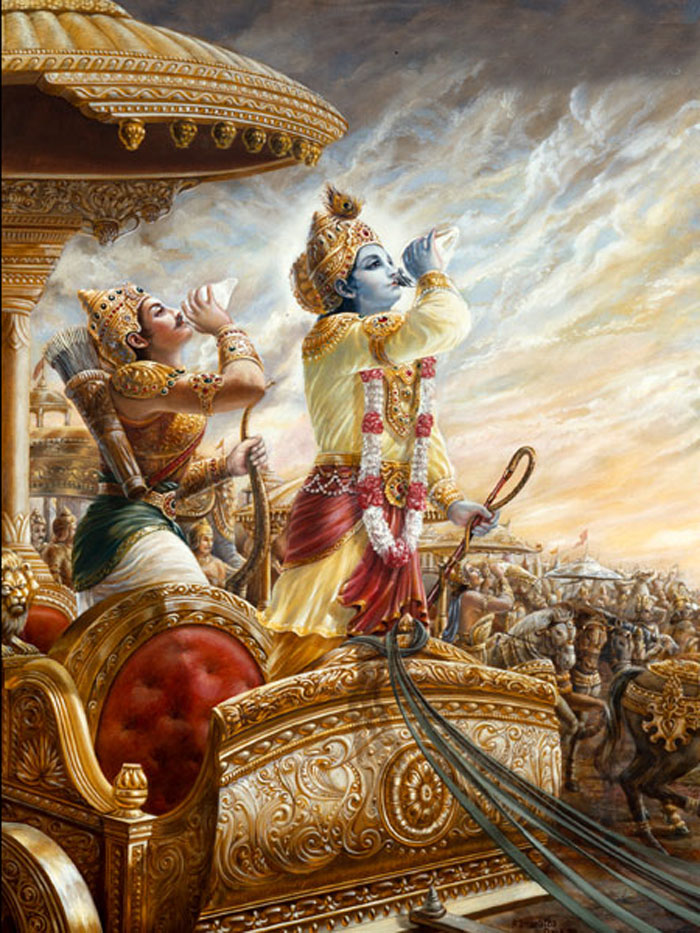
Bhagavad-gita, comprised of 700 Sanskrit verses, this is India's single most important literary and philosophical contribution. It stands unrivalled as a timeless classic — its message just as valid and relevant today as 5,000 years ago when it was first spoken and recorded.
Sometimes called Gitopanishad (as the essence of the 108 Upanishads), Bhagavad-gita is regarded as the most important book of the Vedic literature, the vast body of ancient knowledge which is the foundation of Vedic culture, philosophy and spirituality.
Bhagavad-gita gives a glimpse into India's historical past in the glory days of Vedic civilization. The spiritual substance of the Vedic age continues to live on in the immortal words of Bhagavad-gita and in the lives of persons who follow its meaning.
Great thinkers of the Western world have studied Bhagavad-gita — the American transcendentalists Ralph Waldo Emerson and Henry David Thoreau, the Russian writer Tolstoy, Goethe, Carl Jung, Albert Einstein and many more.